
Agentic AI turning Zero Trust cybersecurity ‘on its head’
Agentic AI raises an important security question: How should organizations authenticate and govern autonomous, non-human users? This Breaking Defense article explores why identity management, fine-grained permissions and policy enforcement are becoming central to Zero Trust strategies as AI agents gain greater autonomy. Read it for perspective on a cybersecurity issue likely to grow alongside agentic AI. Connect with Tech Hero to discuss how these trends may influence your organization’s technology strategy.
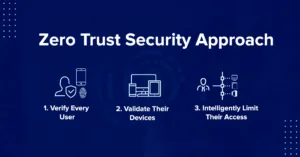
TAMPA — In recent years, the Zero Trust concept of cybersecurity where users and devices are subjected to multiple levels of authentication was thought to be the final answer to protecting data and intellectual property.
But now artificial intelligence (AI) and especially agentic AI — where bots crawl through networks sometimes with a mind on their own to complete assigned tasks — is forcing the Defense Department and Intelligence Community (IC) to rethink how it implements Zero Trust at the enterprise level, according to the IC’s chief information officer.
Because agentic AI is designed to operate autonomously, it may need broad access to data, tools, and systems, making identity and precisely controlled permissions increasingly important to the government’s Zero Trust strategy.